Alumni Career Profiles


Juan Quiñonez Zepeda (he/él) | Class of 2022 - GEOG Major
Program Associate at the Wallace Center at Winrock International; CEO of Cebadilla Ranch in Senatobia, MS; Deputy Commissioner, Tate County Soil and Water Conservation District; Root and Bloom Fellow, National Young Farmers Coalition; Assembling Voices Fellow at Incite Institute at Columbia University
Q/A with Juan:
What was your path to your current role(s)?
After starting an HR role at a Big 4 investment bank following graduation, I moved to Georgia. Shortly after, I felt called back to Mississippi to pursue work more aligned with his passions. Following opportunities in the corporate and nonprofit education sectors, I shifted focus to agriculture and secured my current position at the Wallace Center, where I have worked for nearly three years. What advice would I give to seniors and young graduates who feel conflicted or uncertain? To listen to what you’re passionate about and let it guide you. “I was grateful I took the career change leap when I did. I didn’t want to look back 10 years from then and regret not taking a leap of faith. I wouldn’t be where I am now without doing so.”
How does your geographic training inform your approach to your work?
I credit Freidberg’s Food and Power course as what connected me with agriculture and food systems work in a new light. In my current role at the Wallace Center, I attribute my understanding of the complexities of agriculture and food systems to the courses I took in international development, GIS, immigration, and climate change. More importantly, I reflect on Dartmouth’s goal of teaching students how and not what to think, which I find helpful as I continue to publish parts of my undergraduate thesis and pursue leadership opportunities.
As a Dartmouth student, what did you do in your off-terms (research, internships, work, etc.)?
During my first off-term, I interned for the White House Initiative on Educational Excellence for Hispanics. In my next off-term, I interned for the Immigrant Alliance for Justice and Equity of Mississippi in Jackson, MS, while also auditing a Master’s course at the University of Mississippi in Southern Studies. During my last off-term, I interned for Morgan Stanley in New York City, New York. All of this was achieved while being a Mellon Mays Undergraduate Fellow, conducting research at Dartmouth under Bryan Winston, serving as a tour guide, working on my Honors undergraduate thesis in Geography, and co-founding the 2024 Social Justice Award-winning FUERZA Farmworkers’ Fund.

Claire Dougherty (she/her) | Class of 2020 - GEOG Major
Senior Associate at RMI (formerly the Rocky Mountain Institute)
Q/A with Claire:
What was your path to your current role(s)?
My first role out of school was for a small energy consultancy (seven people!) based in DC called David Gardiner and Associates. I focused on commercial thermal energy decarbonization, aka "how do we replace natural gas in factories with other stuff?" After a few years of really active learning in that role, I was ready for a work and life change– I landed a role at a climate-tech software company called Watershed, focused on corporate carbon accounting, and moved to San Francisco. I learned pretty quickly both that start-up life wasn't right for me and that I missed the system-level approach and decarbonization impact (and challenge!) of what I call "traditional climate" work, especially manufacturing and heavy industry. So I headed to RMI, where I am today!
I am a Senior Associate at RMI (formerly the Rocky Mountain Institute), an energy transition non-profit focused on transforming the global energy system to a secure, clean, prosperous, zero-carbon future for all. I sit on our heavy industries team and specialize in steel and aviation fuel decarbonization. I chose (and stay at) RMI because of its equal valuation of technical and non-technical approaches and commitment to tangible outcomes. We are not an advocacy organization (although those are needed too!) but rather a market-focused "do" or "implementation" organization.
How does your geographic training inform your approach to your work?
My geography training is critical to my work, both directly and indirectly. Decarbonization is fundamentally a global issue, so how different people and places interact is a critical basis for our theory of change. For example, right now I'm working on something called "green iron corridors" that connect geographies with strong iron ore and renewable electricity availability to regions with strong manufacturing infrastructure to increase the efficiency and cost-effectiveness of the green steel transition. Place is critical! Indirectly, I always say that geography taught me how to read, write, think, and talk– and that's what I do every day!
As a Dartmouth student, what did you do in your off-terms (research, internships, work, etc.)?
I spent one summer doing research in the Geography Department with Professor Magilligan and a fall off-term internship in DC at the energy consultancy that I ended up working for out of college. They still do non-summer internships, check them out!

Hannah Rubin (she/her) | Class of 2020 - GEOG Major & EARS Major
Environmental Modeler at Stone Environmental
Q/A with Hannah:
What was your path to your current role(s)?
After I graduated from Dartmouth, I started a PhD program in environmental engineering at the University of Tennessee, Knoxville. My research focused on mapping global environmental change under future climate scenarios with machine learning. After I finished my degree, I moved back to the Northeast to start my current job in environmental consulting.
How does your geographic training inform your approach to your work?
The majority of my work involves geographic concepts. My PhD research was explicitly about mapping and included different interpolation techniques with machine learning and a lot of time trying work around the modifiable areal unit problem. Even though my degree was technically from the civil engineering department at UTK, because climate data are three-dimensional and fundamentally tied to place, there is no avoiding geography and specifically GIS when evaluating the impacts of climate change.
As a Dartmouth student, what did you do in your off-terms (research, internships, work, etc.)?
My first off-term, the summer after my freshman year, I worked as a camp counselor at a wilderness summer camp in Maine. During my sophomore spring I worked on UMaine's research farm. And then during my junior summer I continued my geography honors thesis research.

Arthur Benjamin "Benny" Adapon (he/him) | Class of 2019, GEOG Major
Senior Consultant in Climate Change and Sustainability at Mott MacDonald
Q/A with Benny:
What was your path to your current role(s)?
I am a Senior Consultant in Climate Change and Sustainability at Mott MacDonald, a global engineering and development firm. I am based in London, where I help water companies plan and deliver low-carbon projects to meet the United Kingdom's Net Zero targets. After graduating, I began my career in the Philippines, where I'm from, working in international development consulting on projects focused on climate, cities, and infrastructure. That is where I became interested in how ambitious and inclusive planning and policy can make places more liveable and resilient. Over time, that interest grew into a focus on climate action and finance, and on how investment can help communities prepare for climate impacts. Later, I moved to London to build on that experience, joining Mott MacDonald and starting my master's in Environmental Policy and Regulation at the London School of Economics. My work now connects climate adaptation, resilience, and decarbonisation, helping to turn broad sustainability goals into practical action.
How does your geographic training inform your approach to your work?
Geography made me interested in systems: how people, places, and policies interact, and how local decisions can shape larger climate and environmental outcomes. My undergraduate thesis, guided by professors in the Geography Department, had a lasting influence on how I work today. It taught me how to run projects thoughtfully, work closely with communities, and focus on outcomes that reflect shared values rather than only technical goals. Those lessons still guide how I manage projects, collaborate with engineers, economists, policymakers, and communities, and think about climate action and sustainability in practical terms. Geography gave me a way of seeing connections across disciplines, which has become the foundation of my career.
As a Dartmouth student, what did you do in your off-terms (research, internships, work, etc.)?
During my off-terms, I interned in Chiang Mai, Thailand, through GlobeMed, working on community health projects, and later at a social enterprise in Manila that focused on sustainable livelihoods through renewable energy development. I also spent a great deal of time doing research in the Geography Department, learning archival methods, theoretical frameworks, and research design. Those experiences showed me how broad Geography really is and helped me find the kind of work I wanted to do after college. My advice is to try things that stretch you, and to just try things out: you do not need to have everything figured out yet!

Steffi Colao (she/her) | Class of 2019 - GEOG Major
PhD candidate at Universität Hamburg, researching U.S. and German approaches to migration rights strategic litigation in Los Angeles and Berlin
Q/A with Steffi:
What was your path to your current role(s)?
After Dartmouth, I received the Lombard Fellowship to do research for Reprieve's anti-death penalty project. I really appreciated working with an international office, particularly when it came to the perspective on human rights, and so at UCLA Law I specialized in Critical Race Studies and International/Comparative Law. There, I focused on the influence of U.S. imperialism and structural racism on contemporary migration law, human rights law, and humanitarian law. I published a couple articles on these topics, which were heavily informed by my studies in Geography. I was able to work on cases related to terrorism charges, immigration, and detention through my clinical work and time at a California public defender's office. During law school, I also interned with the Institute on Statelessness and Inclusion in London and conducted research for the UN Special Rapporteur on Contemporary Forms of Racism concerning climate migration. After working with an immigration law resource center, I worked as a legal fellow with ANAR doing detention and asylum casework for Afghan arrivals. ANAR emphasized that its work is a form of reparations for U.S. occupation, and shaped by this experience, I published two pieces on migration as a form of imperial/colonial reparations in the European and U.S. context. In Berlin, I've worked on EU border violence cases as a fellow with ECCHR and on migration rights strategic litigation with IRAP Europe. I became interested in the ways that German and U.S. lawyers are reacting to escalating attacks on migration rights (and became very interested in having a stable income and decent health care), so I developed a PhD project that's been accepted at Uni Hamburg. In the meantime, I'm training to become an immigration counselor here through Refugee Law Clinic Berlin.
How does your geographic training inform your approach to your work?
Geography provided the critical and theoretical background that informs all my work, particularly my writing. I'm incredibly grateful for the chance to have studied in such a radical, creative environment with professors like tish lopez, Luis Alvarez Leon, Coleen Fox, and Treva Ellison. I still look back on readings from my classes and research on carceral geographies, urban geography, critical mapping, disease geographies, and the politics of life/death. With this framework I learned how to understand (and hopefully) disrupt the processes that shape social and political inequalities, especially when it comes to engaging with law. But I also see the ways Geography affected me even in how I interact with place on a daily level.
As a Dartmouth student, what did you do in your off-terms (research, internships, work, etc.)?
Aside from the Geography program to Prague, I had three off-terms. For two, I interned: I worked in Medicaid and nonprofit law in NYC and then in the Bureau of Population, Refugees, and Migration in DC. Once I realized I wanted to go to law school, I took my third off-term to save money by bartending and teaching art in my hometown. In that summer, I also volunteered with a courtwatching project in NYC, and this ended up being my favorite of my off-terms!

Eliza Dekker | Class of 2019, GEOG mod. with ECON Major
Urban Planner at Sasaki, based in NYC
Q/A with Eliza:
What was your path to your current role(s)?
After a brief post-graduate stint in lifestyle public relations, the pandemic prompted me to reassess my career direction and explore fields that combined analytical and creative thinking—particularly those focused on shaping cities, something that I was always passionate about through GEOG coursework. That led me to pursue a Master's in Urban Planning at Columbia University's Graduate School of Architecture, Planning, and Preservation, where I specialized in Urban Analytics. During graduate school, I gained experience across different geographies through internships at WXY, a New York–based design studio, and Bloomberg Associates, which provides strategic consulting to city governments worldwide. After graduating, I wanted to join a design firm that would allow me to bridge urban analysis with design and planning in the pursuit of creating amazing places. Sasaki was a perfect fit. The firm's interdisciplinary model brings planners, urban designers, architects, and landscape architects around the same table to design cities, campuses, and communities with lasting impact.
How does your geographic training inform your approach to your work?
My GEOG coursework (modified with Economics) taught me to think spatially — how people, environments, and systems interact across different scales. That foundation helps me approach urban planning with both a macro and micro perspective: understanding regional patterns while paying attention to neighborhood-level dynamics. Technical tools like GIS and spatial analysis remain central to my work, while the disciplinary emphasis on sense of place and human-environment interaction continues to shape how I collaborate on design and policy solutions for cities.
As a Dartmouth student, what did you do in your off-terms (research, internships, work, etc.)?
As a three-season athlete in track and cross-country, I took my off-term during sophomore summer. I worked with Professor Jonathan Winter in the Geography Department, contributing to research that modeled relationships between Lyme disease incidence and temperature patterns—an experience that sparked my long-term interest in how data can reveal spatial patterns with real-world implications.

Arunsrinivasan (Arun) Ponshunmugam | Class of 2017, GEOG Major
4th year Emergency Medicine Resident at the Johns Hopkins School of Medicine
Q/A with Arun:
What was your path to your current role(s)?
After graduating from Dartmouth college in 2017, I stayed in Hanover for the MD/MBA program at the Geisel School of Medicine at Dartmouth and the Tuck Business School. I graduated from the MD/MBA program in 2022 and matched at Johns Hopkins for residency. I am in my last year of residency and have decided to focus my non-clinical work on AI and digital health in emergency medicine.
How does your geographic training inform your approach to your work?
The Geography major and my time at Dartmouth taught me to understand problems, create solutions and communicate with people of different backgrounds. My job as an emergency doctor in Baltimore is to walk into a patient room or a resuscitation bay and learn as much as I can about a patient in 5-10 minutes using quantitative and qualitative data, and come up with a plan for addressing the patient's most pressing needs. I learned at Dartmouth, largely from the Geography faculty and the many resources that were available to me, how to conduct an ethnography and understand a problem. This is now my everyday job - to understand the problems of patients that come to the emergency department. I then think of solutions to the problems they face (e.g. does a patient facing homelessness and need social work resources? does a patient in cardiac arrest need an ICU bed or interventional cardiology or thrombolysis?). I learned through my Geography major to think critically and I use that to to match problems that patients have to the solutions to which we as a hospital have access. Even more granularly, I learned how to write as a Geography major and a large part of my job is communicating (with patients, family members, consulting medical services, insurance companies/coders); my writing of notes, chats, pages (for pagers!) were all shaped by the training I received as a Geography major. Lastly, I took health geography classes and learned that healthcare is much larger than the hospital and there are many factors that impact the health of a patient -- an invaluable lesson early on. One of my favorite quotes from my time at Dartmouth is "The world is a complicated place" from Professor Abigail Neely, and that lesson early on has been very helpful in understanding problems and devising solutions.
As a Dartmouth student, what did you do in your off-terms (research, internships, work, etc.)?
Freshman Summer: Tucker Fellowship (a fellowship offered to Dartmouth undergraduates interested in international service projects)| New Delhi, India. I worked in the slums of New Delhi, India to teach English to students and shadowed a team of community health workers trying to decrease infant mortality in the slums. Junior Winter: Research | Kwazulu-Natal, South Africa. I conducted field work with Prof. Abigail Neely in South Africa. We did qualitative research on healthcare access in rural KwaZulu-Natal. This work eventually became my senior thesis with Prof. Neely as my advisor. Junior Summer: USAID grant Internship | Chiang Mai, Thailand. I traveled with 3 Dartmouth students to Thailand to work with a local non-profit aiding Burmese refugees. We edited human rights violation reports for the UN; we taught English classes; we fundraised for Burmese refugees.
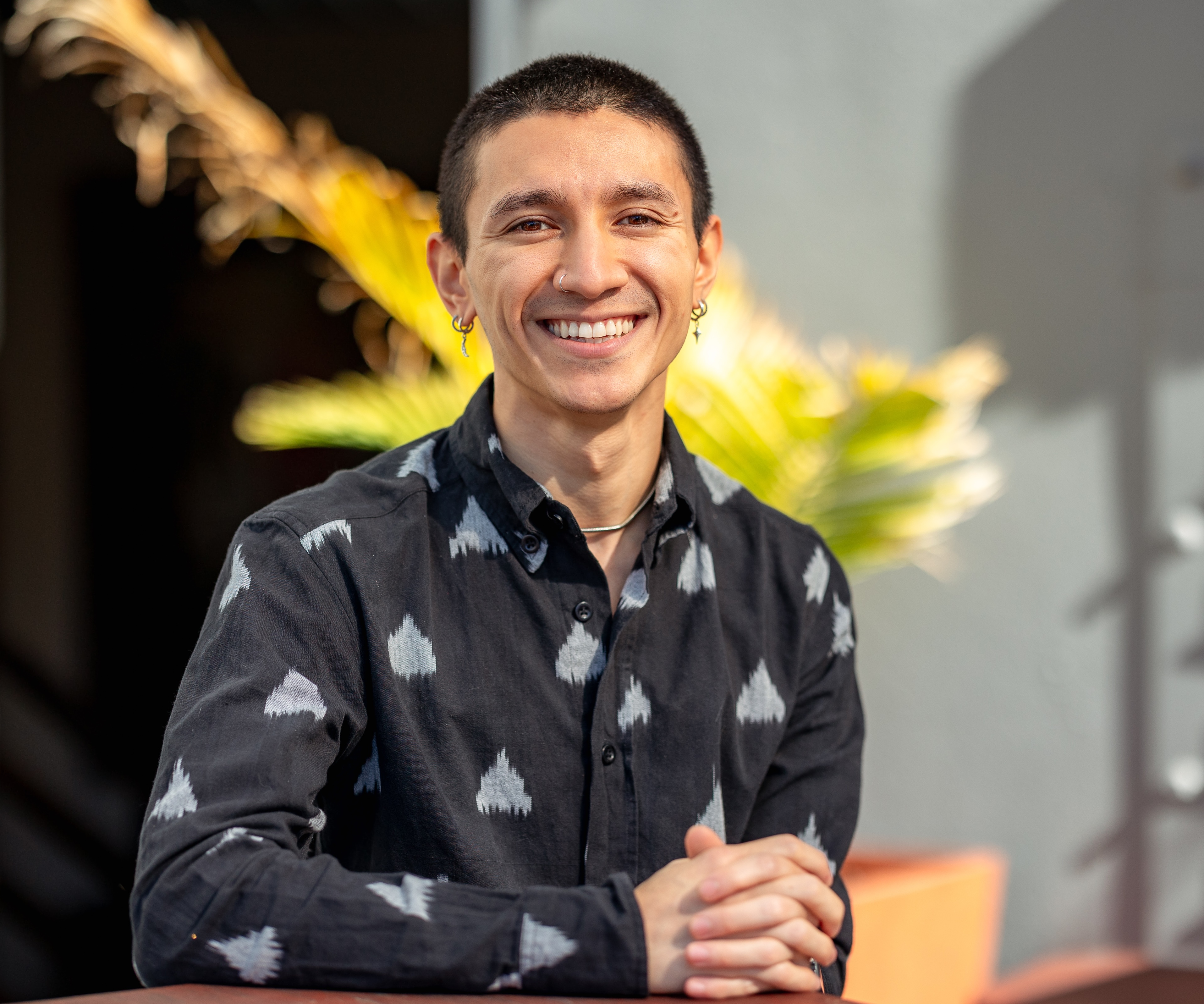
Tyler Rivera (he/him) | Class of 2016, Majors in GEOG, ENVS, & HCD
Manager of Ecosystem Development at Project Equity
Q/A with Tyler:
What was your path to your current role(s)?
I'm Manager of Ecosystem Development at Project Equity, a national nonprofit focused on expanding employee ownership (EO) as a tool for addressing racial wealth disparities and building pathways to economic mobility for working people. In this role, I spearhead efforts to scale EO by working with partner organizations to build lasting EO capacity and infrastructure across key regions. I also coordinate Project Equity's Impact Measurement & Management program, which captures data on the benefits of EO for workers, businesses, and communities.
I've had a circuitous path to my current work in the employee ownership field. After brief stints at a fashion tech startup and an architectural preservation nonprofit in New York, my first meaningful role after Dartmouth was as an AmeriCorps VISTA with the NYC Mayor's Office, where I coordinated a youth leadership and civic engagement program. That experience sparked my interest in participatory action research and popular education, which led me to pursue graduate school to deepen my understanding of how these tools can empower communities.
As a Geography major already drawn to the intersections of people, place, and power, I wanted to explore how planning could strengthen communities' capacity for agency, self-determination, and collective control over the places they call home. After receiving the H. Allen Brooks Traveling Fellowship for a climate change project with the International Organization for Migration in the Marshall Islands, and then leading climate justice advocacy for a youth leadership program in Boston, I enrolled in the Master in City Planning program at MIT DUSP.
While I didn't gravitate toward conventional city planning coursework, a class on the solidarity economy introduced me to worker cooperatives as a model for democratizing workplaces. I was inspired by their potential to shift wealth and power into the hands of workers and offer a genuine alternative to the capitalist paradigm. I interned with the Coalition for Worker Ownership and Power in Boston, and ultimately wrote my thesis on the politics of the worker cooperative movement in Massachusetts.
After graduating, I worked at a small economic development consulting firm in Boston before joining Project Equity to manage a multi-year research partnership with Morehouse College and the University of California, Riverside focused on advancing Black wealth building and economic opportunity through employee ownership. I feel incredibly fortunate to work in a field that aligns so closely with my values and contributes to building a more just, democratic economy for all.
How does your geographic training inform your approach to your work?
For me, the through-line between what I studied as a Geography major and the work I've been engaged in since lies in questions of how power is distributed, and how people can resist, challenge, and transform asymmetric systems of power. The Geography program trained me to think spatially and relationally—to see how the places we live and work are shaped by, and are reflections of, the economic, social, and political structures in which we're enmeshed. The ability to understand and critically interrogate these structures has been invaluable to my work in employee ownership, where the goal is to democratize the economy and redistribute power and opportunity. What I learned as a Geography major has also grounded my belief that ownership and control over one's community—whether land, infrastructure, industry, or policy—are essential to realizing a more just and equitable world. I'm so grateful for how my Geography background continues to shape my interests, worldview, and the kind of change I want to help create.
As a Dartmouth student, what did you do in your off-terms (research, internships, work, etc.)?
Freshman summer, I worked for the United Way of King County's free summer meals program as an AmeriCorps VISTA. My sophomore fall, I interned at the American University of Kuwait through Dartmouth's exchange program with AUK, with placements in their Office of Student Life, writing center, and as a research assistant with the Center for Gulf Studies. I participated in the Environmental Studies FSP in South Africa and Namibia my junior fall, which I highly recommend. After an unsuccessful corporate recruiting cycle (that I'm extremely grateful for in retrospect), I worked as a business development intern at a recruiting and staffing advisory firm in New York—not exactly what I was interested in, but a valuable professional experience nonetheless. If there's any lesson to be drawn from my path at Dartmouth, it's that you shouldn't worry about trying to engineer the perfect resume for yourself. Stay curious, explore opportunities outside the traditional recruiting track, and trust that the skills and insights you gain along the way will add up in ways you can't predict.